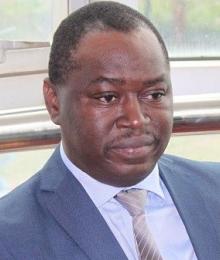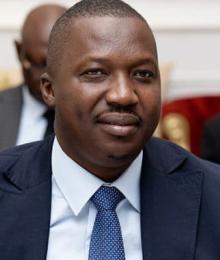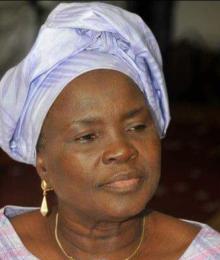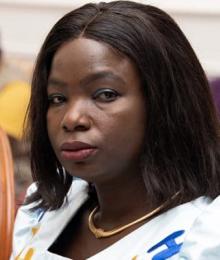


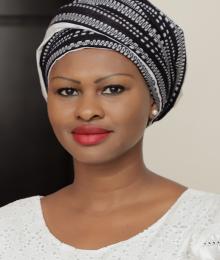
Zeinab Camara, born on January 27, 1981, in Conakry, is a Guinean politician, activist, and entrepreneur who has made her mark on her country's public scene through her multifaceted commitment to the development and empowerment of youth and women. Trained in international relations and public management in England, where she worked for the National Health Service, she returned to Guinea in 2009 to serve in various strategic positions, notably as Chief of Staff at the Ministry of Higher Education and Scientific Research, before becoming a member of parliament for the Boffa prefecture between 2020 and 2021, a mandate during which she held the position of Second Questor at the National Assembly.
Passionate about football and convinced of sport as a vehicle for social advancement, she founded the Fatala Football Club and the Ortega Academy in Boffa in 2017, offering young boys and girls a dual opportunity for sports and academic training, while in 2014, she created Women in Mining, an organization through which she mobilized three million dollars during the Ebola epidemic to support Guinean communities. After being prosecuted by the CRIEF in 2022 for various accusations related to her role as a member of parliament, she was ultimately acquitted in 2024 and continues to advocate for a federalist vision for Guinean governance, drawing inspiration from historical traditions such as the Kouroukan Fouga Charter.
Introduction
Zeinab Camara was born on January 27, 1981, in Conakry, the capital of Guinea. Coming from the Guinean bourgeoisie and originally from the Boffa prefecture, she inherited a remarkable family political heritage. Her grandfather, El Hadj Saliou Coumbassa, a prominent political figure under President Sékou Touré's administration, held the position of Minister of Justice before being imprisoned for nine years in the notorious Camp Boiro. This political lineage would profoundly shape her future commitment, as she herself states: "I don't have a background as an activist, that's true. But in my family, politics isn't a sudden desire. I was raised on it."
Her adolescence was spent across several international horizons. Her father, a diplomat, took her to Cairo, while her mother resided in France. This early exposure to different cultures shaped her cosmopolitan vision. From the age of fifteen, she worked as a waitress at Pizza Hut in Villetaneuse, in the Paris region, already demonstrating remarkable determination and independence.
It was ultimately in England that she built her academic career. In Leicester, north of London, she earned a bachelor's degree in international relations with a specialization in American political affairs from De Montfort University. She then pursued a master's degree in governance and public administration, specifically in strategic public management, at Leicester Business School, University of Leicester. This Anglo-Saxon education provided her with valuable expertise in public affairs management and international relations.
Professional Experience in the United Kingdom
Upon graduation, Zeinab Camara joined the British public health system, the National Health Service (NHS), where she worked as a program coordinator for the East Midlands region. This experience within a major public institution allowed her to acquire solid skills in coordination and large-scale project management. However, despite the professional stability this position offered, her heart remained turned toward her native country.
Return to Guinea and Commitment to Development
At the end of 2008, as Guinea was going through a period of political uncertainty marked by the illness and increasingly rare appearances of President Lansana Conté, Zeinab Camara decided to return home. "Guinea was in complete instability, but I felt the time had come," she explains. Her return was scheduled for December 22, 2008, the very day the President of the National Assembly announced Lansana Conté's death. Borders closed, flights were cancelled, and the country plunged into chaos. Two days later, Moussa Dadis Camara proclaimed himself president. Despite these tumultuous circumstances, she finally reached Conakry in January 2009.
Back in Guinea, she became actively involved in the Circle of Reflection and Action for the Nation (CRAN), a think tank created in 2009 by young Guineans from the diaspora. Amara Somparé, Minister of Information and Communication with whom she collaborated, testifies to her commitment: "Zeinab is a very ambitious woman and when she commits to a cause, she does so one thousand percent."
In 2009, she joined the Ministry of Decentralization and Local Development, then became technical advisor to the chief of staff of the presidency. In 2011, the multinational mining company Rio Tinto offered her a first position which she categorically refused. "The activist in me preferred to decline. I knew the negative effects of mining extraction, I told them that the private sector doesn't interest me," she recounts. However, the Australian group returned with a proposal better suited to her convictions: coordinator of relations with local communities. She accepted this role that allowed her to reconcile the private sector with social commitment.
Subsequently, Zeinab Camara held the strategic position of chief of staff at the Ministry of Higher Education and Scientific Research of Guinea. In this function, she invested particularly in the issue of employability for young Guineans. During an appearance on BBC Africa's Cash Eco program in July 2019, she presented government initiatives in favor of professional integration for graduates, while promoting the local "Kendily" fabric. She notably encouraged high school graduates to choose technical fields to improve their employment prospects in a context where the unemployment rate approached sixty percent according to the National Institute of Statistics.
She also sits on the board of directors of Africa 2.0 and the Guinea Mining Club, thereby consolidating her professional network and influence in key sectors of Guinean development.
Social Activism and Community Engagement
Women in Mining
In March 2014, Zeinab Camara founded Women in Mining, an organization dedicated to promoting women in the Guinean mining industry. This initiative demonstrates her determination to break down gender barriers in a traditionally male-dominated sector. Her leadership manifested brilliantly during the Ebola epidemic that severely struck Guinea. Thanks to her exceptional mobilization capacity, she gathered three million US dollars in logistics and financial support for communities, the State, and development actors. This large-scale action demonstrates her operational effectiveness and commitment to vulnerable populations.
Fatala Football Club
Passionate about football since her childhood in the United Kingdom, the birthplace of the sport, Zeinab Camara created the Fatala Football Club in Boffa in 2017. This initiative aims to offer young people, boys and girls, a means to flourish through sports. "Football is indeed a sector of promotion for young people," she affirms with conviction. She bought the prefectural club of Boffa for a symbolic sum, taking advantage of FIFA's new policy.
Her project goes well beyond simple sports coaching. She created the Ortega football academy, attached to Fatala FC, which welcomes children and pre-adolescents from six to fourteen years old. Schooling is mandatory for all young people in the academy. "We tell them, you have at least two options, either you become professional footballers, or, if you can't, you at least have the training to have decent socio-professional integration," she explains. This holistic approach combats school dropout while developing athletic talents.
The club plays in the second division, which allows, according to its president, to structure the project progressively before reaching the national championship. Her ambition is clear: "In five years, I want the academy to be a reference in the sub-region." She cites Naby Keïta, Guinean international star and Liverpool midfielder, as a reference to inspire young people. Her dream is to "produce three, four or five Naby Keïtas for the future of Guinean football."
Other Associative Commitments
Zeinab Camara also chairs the NGO Youth Leadership for Boffa Development and serves as a mentor for J-Awards Guinea. These multiple responsibilities reflect her multidimensional commitment to the fulfillment of Guinean youth, particularly that of her home region.
Political Career and Parliamentary Mandate
2020 Legislative Elections
In 2020, Zeinab Camara took a decisive step in her career by running for legislative elections in her hometown of Boffa, under the colors of the RPG Rainbow (Rally of the Guinean People), the ruling party. Although she did not have a background as a zealous activist, her concrete actions in the field caught the attention of party leaders. An RPG dignitary explains: "In Boffa, Zeinab Camara was the most credible choice for the RPG. We had noticed her actions in the field. She had, for example, created a movement for young people and was interested in infrastructure development in this mining area."
It was from Boffa that President Alpha Condé had called on young people to vote in February 2020, promising them the establishment of a fund dedicated to youth and professional integration. The official launch of Zeinab Camara's campaign took place on February 1, 2020, in Koba, in a grandiose atmosphere at the Koba Tatéma stadium. She was welcomed "as a hero" and "as a worthy daughter" by a jubilant crowd, accompanied by government members and RPG officials. A giant free concert with local artists and comedians was offered to the population.
In the single-member ballot of March 22, 2020, she faced a single opponent, the candidate of the Democratic Union of Guinea (UDG) of Mamadou Sylla. She won the election in the first round with fifty-eight percent of the votes, despite the difficult context marked by the boycott of the National Front for the Defense of the Constitution (FNDC) and violence related to the Covid-19 pandemic.
Parliamentary Activity
Between April 2020 and September 2021, Zeinab Camara sat in the Guinean National Assembly as deputy for the Boffa prefecture. She held the position of second questor within the parliament, an important administrative function in the management of the institution. Dressed in a large embroidered yellow boubou during the installation of the new Assembly on April 21, 2020, the thirty-something stood out in the corridors of the chamber with her youth and dynamism.
During her mandate, she actively engaged on the social level for the promotion of young people and female engagement in Boffa. She also defended government positions against criticism, notably in a tribune titled "What if CESA and the opposition (FNDC) help defuse tensions" published in May 2020. In this text, she contested the analyses of the Africa Center for Strategic Studies (CESA) on the Guinean political situation and defended the legitimacy of the constitutional referendum and legislative elections of March 2020.
Reflections on Federalism
In March 2023, after the political transition following the military coup of September 2021, Zeinab Camara published a major contribution titled "Constitutional Reform in Guinea: What if the Solution Lies in Federalism?". In this dense text, she proposes federalism as a structural response to recurrent governance problems in Guinea. She criticizes the "omnipresent and omnipotent presidentialism" that has characterized all Guinean regimes since independence and advocates for effective decentralization of power. She draws on historical references such as the Kouroukan Fouga Charter of 1236 and the Diwés of Foutah to demonstrate that federative structures are rooted in Guinean traditions. This contribution testifies to her in-depth reflection on the institutional future of her country.
Legal Proceedings and Acquittal
On Friday, December 30, 2022, the investigating magistrates of the Court for the Repression of Economic and Financial Crimes (CRIEF) issued an arrest warrant against Zeinab Camara. She was prosecuted, alongside other former deputies, for serious accusations including embezzlement of public funds, illicit enrichment, money laundering, corruption in the public and private sectors, illegal conflict of interest, and complicity.
During the proceedings, in July 2023, the CRIEF trial chamber granted her authorization to leave the country for a period of one month for family reasons, a decision announced by Judge Francis Kova Zoumanigui. After two years of trial, the CRIEF finally acquitted her and dismissed all charges against her. This acquittal marked the end of a difficult judicial ordeal and allowed the former deputy to regain complete freedom.
Recognition and Distinctions
Zeinab Camara's journey and commitment have been honored with several distinctions. She received the prize for best female prospects at the night of women's excellence organized by the Gnouma Communication group in its fourteenth edition. In 2014, the Women Empowerment Network awarded her the excellence prize, thereby recognizing her action in favor of the empowerment of Guinean women.
Legacy and Vision
Zeinab Camara embodies a generation of Guinean leaders trained internationally who choose to return home to contribute to its development. Her journey illustrates the diversity of possible commitments: public sector, mining industry, civil society, sports, and politics. Her deep conviction that development must be endogenous and inclusive drives her to multiply initiatives, particularly in favor of youth and women.
Determined and proactive, she represents a new form of African leadership, capable of navigating between international spheres and local realities, between field action and strategic reflection. Her commitment to women's and men's football, her activism for the place of women in the mining sector, and her reflections on federal governance testify to a comprehensive vision of Guinean development.
Today, Zeinab Camara continues to work for the transformation of Guinea, driven by the conviction that young people and women are the true engines of change. Her ambition to make the Ortega academy a sub-regional reference and her in-depth reflection on the country's institutional structures demonstrate that she remains a committed actor for the future of Guinea.