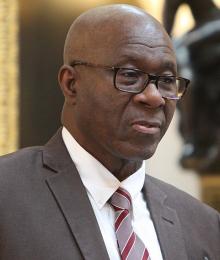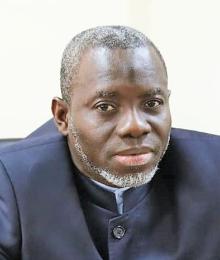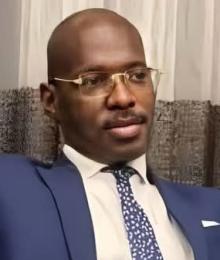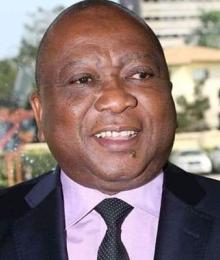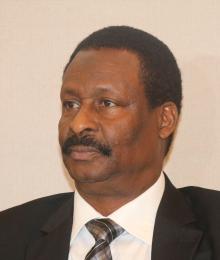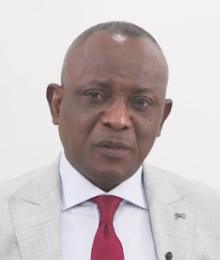


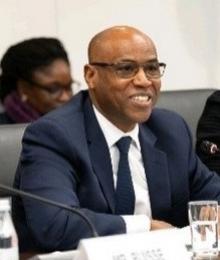
Facinet Sylla is a Guinean economist and politician who has served as Minister of Budget since March 13, 2024, in the Bah Oury government. A graduate of the National School of Statistics and Applied Economics (ENSEA) in Abidjan, holder of a Master's degree in Public Management and Administration from the University of Antwerp and a Master's from CEFEB at the University of Paris I-Sorbonne, this seasoned technocrat brings nearly three decades of experience in international financial institutions.
His career has taken him from the Central Bank of Guinea (where he spent over 10 years) to the West African Monetary Institute, then to the African Development Bank for 8 years, before becoming Alternate Executive Director at the IMF in 2018 and Executive Director for Africa Group II in October 2022, representing 23 African countries. Recognized for his expertise in public finance, monetary policy, and economic development, Facinet Sylla is considered one of the most respected voices in international financial institutions, now bringing his experience to serve Guinea's economic development.
Introduction
Facinet Sylla embodies the profile of a modern Guinean technocrat, combining excellent academic training with diverse international experience. Appointed Minister of Budget of the Republic of Guinea on March 13, 2024, this seasoned expert in public finance and monetary affairs brings to the Bah Oury government expertise forged within the world's leading international financial institutions.
Academic Background
Facinet Sylla's academic journey reflects a constant pursuit of excellence that laid the solid foundations for his professional career. Originally from Guinea, he first attended the Faculty of Social and Natural Sciences in Donka (FASSONAD), the first step in a curriculum that would lead him to Africa's and Europe's most prestigious academic institutions.
His higher education continued at the National School of Statistics and Applied Economics (ENSEA) in Abidjan, Côte d'Ivoire, where he obtained his engineering degree in statistics and applied mathematics. This technical specialization provided him with the analytical tools essential for understanding and addressing the complex economic challenges that would mark his career.
Continuing his development, Facinet Sylla earned a Master's degree in public management and administration from the University of Antwerp (RUCA) in Belgium. This complementary training enabled him to acquire a thorough understanding of public management mechanisms and the administrative issues that characterize state institutions.
His education was enriched by a Master's degree from the Center for Financial, Economic and Banking Studies (CEFEB) at the University of Paris I – Panthéon-Sorbonne in France. This prestigious training gave him mastery of financial, banking and economic issues that would prove decisive throughout his professional career.
Early Professional Career
Facinet Sylla began his professional career at the European Union Commission, which he left in 1993 to dedicate himself to institutions more directly linked to African and Guinean economic realities.
It was at the Central Bank of the Republic of Guinea (BCRG) that he truly laid the foundations of his career, spending more than a decade there between the mid-1990s and early 2000s. During this formative period, he held the strategic position of Director of Research, Statistics and International Relations, and later, between 2008 and 2010, Director of Studies, Statistics and International Relations.
In this capacity, Facinet Sylla assumed crucial responsibilities: initiating, coordinating and supervising the activities of the three sub-directorates under his authority. He also advised the Governor of the BCRG on the conduct of monetary policy and analyzed the country's macroeconomic and financial developments. This experience at the heart of Guinea's monetary institution enabled him to acquire an intimate understanding of national economic challenges and monetary policy levers.
Regional Experience
Between 2001 and 2007, Facinet Sylla took an important step by joining the West African Monetary Institute (WAMI) in Accra, Ghana, where he worked for eight years as Division Chief. This regional experience considerably broadened his field of expertise and his vision of African economic integration issues.
At WAMI, he undertook in-depth economic studies and analyses on all aspects of integration in the West African Monetary Zone (WAMZ). He conducted field surveillance missions, particularly in Guinea, to assess progress made in achieving regional economic convergence criteria.
One of his major roles consisted of coordinating statistics development and harmonization activities within the WAMZ, in close collaboration with the ECOWAS Commission. He particularly participated in the establishment and monitoring of the ECOMAC Program, an initiative aimed at harmonizing macroeconomic data in the West African sub-region.
This period at WAMI enabled Facinet Sylla to develop valuable regional expertise and build an extensive professional network that would serve him throughout his career.
African Development Bank
Capitalizing on his considerable experience, Facinet Sylla joined the African Development Bank (AfDB) where he spent more than eight years as an economist. This stage marked a new dimension in his career, enabling him to work on files from Africa's largest economies.
At the AfDB, he successively held positions as Principal Country Economist in the West Africa Directorate, supervising strategic countries such as Chad, Cameroon, Burkina Faso, Niger and Senegal. He also assumed responsibilities as Principal Economist in charge of institutional capacity building in the Fragile States Department.
During this crucial period, Facinet Sylla supervised some of Africa's largest economies, including Nigeria, Ghana, Côte d'Ivoire, Cameroon and Senegal, as well as several fragile states. This exposure enabled him to acquire diverse expertise on socio-economic, monetary and public finance issues in these different national contexts.
His experience at the AfDB developed his skills in dialogue with governments and development partners, portfolio management, addressing fragility issues and resource mobilization. He also perfected his mastery of the formulation and implementation of macroeconomic policies and projects, thus preparing himself to achieve results in complex situations with diverse teams.
Facinet Sylla actively engaged in the design, organization and coordination of large-scale socio-economic reforms, programs and projects. He developed a particular talent for dialogue with national and international officials at all levels, including ministers and heads of state, mastering advocacy techniques and resource mobilization in favor of African countries.
At the International Monetary Fund
In November 2018, Facinet Sylla assumed the functions of Alternate Executive Director at the International Monetary Fund (IMF), a Bretton Woods institution where he represented the interests of the African francophone group. This appointment confirmed his recognition at the highest level of international financial institutions.
The decisive step came during the IMF annual meetings held from October 10 to 16, 2022. At the conclusion of these meetings, Facinet Sylla was designated Executive Director for Africa Group II of the IMF, a function he assumed from November 1, 2022. His portfolio then covered 23 countries in West, North, Central, East and Southern Africa, including Benin, Burkina Faso, Cameroon, Central African Republic, Comoros, Democratic Republic of Congo, Republic of Congo, Côte d'Ivoire, Djibouti, Gabon, Guinea, Guinea-Bissau, Equatorial Guinea, Madagascar, Mali, Mauritania, Mauritius, Niger, Rwanda, São Tomé and Príncipe, Senegal, Chad and Togo.
As Executive Director of Group II, Facinet Sylla represented these countries on the IMF Executive Board, defending their interests in the institution's strategic decisions. His performance in this role earned him recognition from his peers and IMF management. Kristalina Georgieva, IMF Managing Director, would testify during a World Bank and IMF Spring Meetings: "Before becoming Minister, he was one of the most listened to and respected voices in our institution. With a portfolio of 23 countries as group executive director."
This period at the IMF, particularly his years in Washington, definitively consolidated his expertise in international monetary and financial issues and gave him a global vision of African economic challenges.
Appointment as Minister of Budget
On March 13, 2024, by decree of the President of the Transition, General Mamadi Doumbouya, Facinet Sylla was appointed Minister of Budget of the Republic of Guinea in the government led by Prime Minister Bah Oury. He thus succeeded Lanciné Condé in these strategic functions for the national economy.
This appointment, which surprised some observers who expected him rather at the Prime Minister's office, marked the return of this seasoned technocrat to the direct service of his native country after nearly three decades of experience in national and international institutions, including twenty years in leadership positions.
His assumption of office came in a complex national and international economic context, marked by multiple challenges that his international experience particularly prepared him to face. Facinet Sylla's profile, combining technical expertise, strategic vision and thorough knowledge of international financial mechanisms, makes him a valuable asset for managing Guinean public finances.
Ministerial Action
Upon taking office, Minister Facinet Sylla engaged in active dialogue with national institutions, particularly the National Transition Council (CNT). In August 2024, during the presentation of the 2025-2027 multi-year budget programming document, he addressed the concerns of national councilors on various crucial subjects.
Regarding the valorization of mining resources and the use of weighbridges in mining ports, he recognized the importance of the issue and committed to strictly applying existing laws. On dialogue with the private sector, he promised to make it "a management tool" and to systematically consult economic actors before important decisions.
The minister developed a strategic vision around the Simandou project, which he considers not simply as a mining project but as "a catalyst project for development." This innovative approach aims to transform mining resources into levers of sustainable economic development, ensuring that Guinean populations concretely benefit from the proceeds of mining exploitation.
In October 2024, Facinet Sylla presented an ambitious supplementary finance law marked by a significant increase in revenue and public investment. Projected revenues increased from 35,073 billion to 43,067 billion Guinean francs, an increase of 22.4%, driven particularly by increased customs and tax revenues. This performance testifies to the effectiveness of his management and his ability to mobilize the resources necessary for national development.
Vision for the Future
In October 2025, during the signing of a memorandum of understanding between the Guinean government and the Chinese company SPIC, Facinet Sylla outlined his vision for Guinean economic development, placing human resources at the heart of economic sovereignty. "We have had mass education, now we can move toward elite education and promote the best Guineans, wherever they come from," he declared, announcing the concept of Simandou Academy.
This initiative aims to train a Guinean elite capable of driving the country's development, by sending the best students to the best universities and engineering schools in China and France. This vision is part of a broader strategy of economic transformation and strengthening national capacities.
Exemplary Career in Service of Africa
With twenty-nine years of professional experience in national and international institutions, Facinet Sylla embodies the success of an exceptional career entirely dedicated to public service and African economic development. Author of numerous articles and documents on macroeconomic issues, he combines theoretical expertise with practical field experience.
His career, from the corridors of the Central Bank of Guinea to the IMF offices in Washington, testifies to an exemplary professional trajectory marked by excellence, rigor and commitment. At the head of Guinea's Ministry of Budget, Facinet Sylla now puts his immense expertise at the service of his native country, with the objective of building "a more resilient, more equitable economy oriented toward sustainable development."
The appointment of this sober and efficient technocrat, recognized and respected by his international peers, represents a major asset for Guinea in its quest for economic development and budgetary sovereignty. His enlightened leadership and strategic vision constitute guarantees of good financial governance and responsible management of public funds.