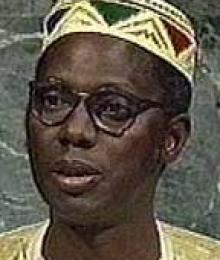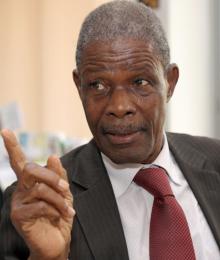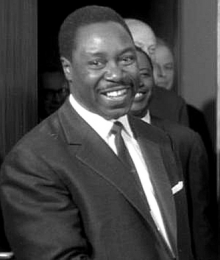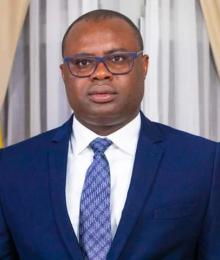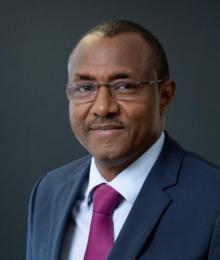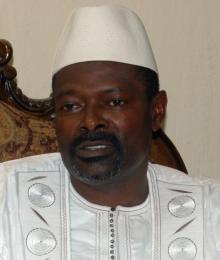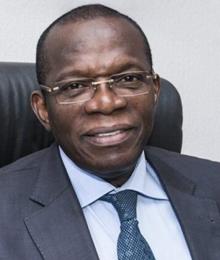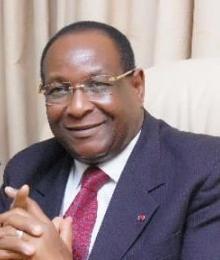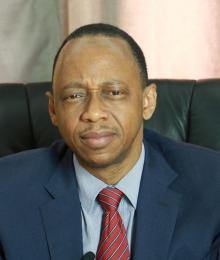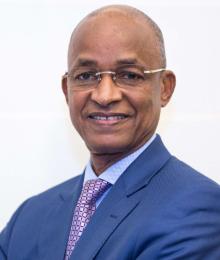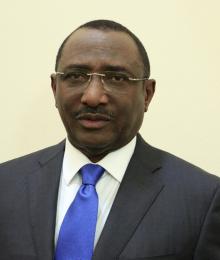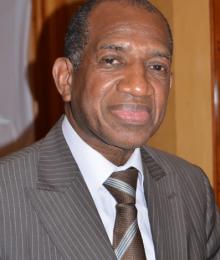



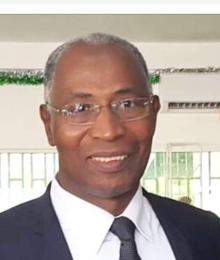
Bah Oury is an indispensable political figure in the contemporary history of Guinea. Founder of the opposition party UFDG, a long-standing advocate of democracy and human rights, he has participated in all the major civil struggles in his country.
Jailed and convicted on several occasions, Bah Oury continued to fight peacefully for the rule of law in Guinea.
His uprightness, courage and self-righteousness made him a charismatic leader and a respected moral conscience of the Guinean political landscape.
Introduction
Amadou Oury Bah, commonly known as Bah Oury, stands as one of the most emblematic and respected political figures in contemporary Guinea. Born in 1958 in Pita, in the Fouta Djallon highlands of Middle Guinea, this exceptional statesman has devoted more than three decades of his life to the struggle for democracy, human rights, and national reconciliation. Since February 27, 2024, he has held the strategic position of Prime Minister of the Republic of Guinea, a role to which he was reappointed on January 27, 2026 by President Mamadi Doumbouya — a testament to the confidence placed in his abilities as a reformer and unifier.
Childhood and Education
Amadou Oury Bah's story begins in 1958 in the prefecture of Pita, located in Middle Guinea. When he was just six years old, in 1964, his family made the difficult decision to flee Sékou Touré's dictatorship and seek refuge in Senegal. It was in this host country that the young Amadou would forge his character and develop his exceptional intellectual abilities.
His academic journey in Senegal was nothing short of remarkable. A brilliant and diligent student, he distinguished himself through outstanding academic performance. He placed first in the general competitive examinations of Senegalese lycées in four major disciplines — mathematics, French, philosophy, and history — and earned his baccalaureate in mathematical sciences with highest honors, finishing first in the entire Republic of Senegal.
This excellence attracted the attention of Senegalese President Léopold Sédar Senghor himself, who, deeply impressed by this exemplary record, made two historic decisions: he granted Bah Oury Senegalese citizenship and awarded him a prestigious scholarship to pursue preparatory studies at the Lycée Louis-le-Grand in Paris, one of France's most renowned institutions.
After this elite training, Bah Oury taught advanced mathematics in France for several years, where a promising academic career awaited him. However, driven by a profound sense of patriotic duty and acutely aware of his homeland's needs, he made the courageous decision to abandon that comfortable path and return to Guinea following the death of Sékou Touré in 1984. This choice marked the beginning of his unwavering commitment to Guinea's democratic transformation.
Early Struggles for Democracy
Upon returning to Guinea in the mid-1980s, Amadou Oury Bah immediately immersed himself in the democratic awakening of Guinean youth. The country was only just emerging from decades of dictatorship, and democratic structures were virtually nonexistent. It was in this difficult context that he resolved to lay the groundwork for an organized civil society conscious of its rights.
In 1990, even before the adoption of the Fundamental Law by the Military Committee for National Recovery (CMRN), Bah Oury co-founded, alongside elder statesman Thierno Madjou Sow, the Guinean Organization for the Defense of Human Rights and Citizens' Rights (OGDH). These activists became pioneers of modern political organization in the country, establishing the foundations of democratic pluralism in Guinea.
Bah Oury's courage was quickly put to the test. In November 1990, following the assassination of student Sékou Traoré by the regime, he and the OGDH called for peaceful demonstrations to denounce this act of state violence. The government's response was brutal: they were arrested and imprisoned for three days. This experience of repression only strengthened his determination to fight for fundamental freedoms.
Founding of the UFDG
It was in clandestinity, in the face of an increasingly authoritarian regime, that Bah Oury took a decisive step forward. In 1991, together with other activists who shared his vision of a democratic Guinea, he founded the Union of Democratic Forces of Guinea (UFDG), which would become one of the country's main opposition parties.
The year 1992 marked a dramatic turning point in his career. In October, he was accused of plotting an assassination attempt against General Lansana Conté, then President of the Republic. He was arrested but ultimately released two days later under mounting popular pressure — already demonstrating the influence and respect he commanded among the Guinean people.
Throughout the 1990s, as the country progressively descended into authoritarianism, corruption, and repression, Bah Oury and the UFDG relentlessly pursued the democratic struggle. They systematically denounced electoral manipulation and human rights violations, often paying a heavy price for their commitment.
As UFDG Secretary-General, Bah Oury organized in September 2004 the first large-scale peaceful demonstration demanding press freedom and respect for democratic rights. Police repression was fierce, but the message was clear: the Guinean opposition existed, was organized, and would not back down.
During the 2005 municipal elections, despite massive fraud orchestrated by the ruling party, the UFDG demonstrated its growing strength and popular roots. The year 2007 marked a new milestone with the arrival of Cellou Dalein Diallo, who joined the UFDG and became its president. Bah Oury was then appointed First Vice-President, responsible for foreign relations and communications. This strategic alliance allowed the UFDG to rally more Guineans hoping for democratic change.
Under this new configuration, the UFDG established itself as the primary opposition force against successive authoritarian regimes. The party actively participated in the major social movements of 2006 and 2007, supporting demands put forward by trade unions and civil society — at the cost of dozens of young activists' lives. Under Bah Oury's leadership, the party structured itself to become a genuine democratic institution, equipped with objective, rational, and formal foundations across the entire national territory.
First Government Role
May 19, 2008 constitutes a historic moment for Guinean democracy: Bah Oury was appointed Minister of National Reconciliation, Solidarity, and Relations with Institutions in the government of Prime Minister Ahmed Tidiane Souaré. He thereby became the first representative of an opposition party in the history of independent Guinea to hold a ministerial position.
During his six months in government, Bah Oury accomplished acts of considerable historical significance. He officially acknowledged the Guinean State's responsibility for political crimes committed since independence, breaking decades of silence and denial. He secured reparations for the victims of the Kaporo Rails affair, which had resulted in the imprisonment of elder statesman Mamadou Ba.
But his most striking achievement was undoubtedly the restitution to families of the remains of eight forestry workers murdered in 2000 on orders from General Conté. Through his courage and determination, he managed to locate these remains and return them to their loved ones after eight years of unbearable waiting. This profound act allowed families to finally grieve, and it stands as testimony to his deep humanity and his commitment to truth and justice.
Trials and Exile
Bah Oury's path has not been without hardship. Following the 2011 attack on President Alpha Condé's residence, he was forced into exile in France for several years. This difficult period could have marked the end of his political career, but it only strengthened his resolve. Granted a pardon in 2015, he returned to Guinea to resume his political activities, once again demonstrating his resilience and his unshakeable attachment to his country.
Prime Minister of the Transition
February 27, 2024 marked a major turning point in Amadou Oury Bah's political life. President Mamadi Doumbouya appointed him Prime Minister of the Transition to replace Bernard Goumou, who had been dismissed amid a political and social crisis. This appointment came at a particularly delicate moment, and the choice of Bah Oury — recognized for his qualities as a unifier — was perceived as a beacon of hope for ending the crisis.
His mission was immense and complex: to ease social tensions marked by strikes and restrictions on freedoms, to manage the economic transition amid a deep energy crisis, and above all, to organize the return to constitutional order in a climate of intense debate over the electoral timetable.
His governmental action was organized around several strategic axes. On the constitutional front, he supervised the organization of the 2025 referendum, which culminated in the adoption of a new Constitution approved by more than 89% of voters. He then steered the presidential election of December 28, 2025, which saw General Mamadi Doumbouya win outright in the first round.
In terms of administrative and social reforms, Bah Oury placed strong emphasis on the moralization of public life. The cleanup of the civil service — made possible by the FUGAS database — led to the elimination of thousands of ghost employees and generated significant budgetary savings. He also launched a wide-ranging decentralization program with the creation of 24 new urban and rural municipalities, and introduced for the first time an 80% coverage of medical expenses for civil servants and retirees.
On the economic front, he had to contend with a difficult legacy, particularly in the wake of the fuel depot explosion in late 2023. He engaged in discussions with the World Bank to transform the energy sector and accelerated major infrastructure projects such as the Tanènè bridge and the massive Simandou mining project. Under his leadership, inflation was stabilized at around 3% by the end of 2025, despite robust economic growth.
Reappointment and New Legitimacy
On January 27, 2026, newly elected President Mamadi Doumbouya reappointed Amadou Oury Bah as Prime Minister. This decision reflects the complete confidence placed in this 68-year-old politician to lead the reforms of the first presidential term. The President also entrusted him with the responsibility of organizing the 'Generation for Modernity and Development' (GMD) movement in preparation for the upcoming legislative and municipal elections.
This reappointment represents far more than mere administrative continuity. It symbolizes the comeback of a man who seemed to have been forgotten on the Guinean political scene — a political redemption fully embraced. Having steered the transitional government for nearly two years and then led the GMD's victorious presidential campaign, Bah Oury now sees his central role in the architecture of Guinean politics definitively consecrated.
A Legacy in the Making
Today president of the Union of Democrats for the Renaissance of Guinea (UDRG), Amadou Oury Bah continues to leave his mark on the political history of his country. His exceptional journey — from clandestine activist under dictatorship to confirmed Prime Minister — commands admiration and respect across political divides.
His integrity, his courage in the face of adversity, his selflessness, and his moral rectitude have made him a charismatic leader and an ethical conscience of the Guinean political landscape. His courageous stances in favor of national reconciliation and the defense of human rights bear witness to a commitment that transcends personal ambition to serve a larger vision: that of a Guinea reconciled with its history, truly democratic, and respectful of the rights of all its citizens.
Amadou Oury Bah embodies the tenacious hope of a generation that refused to accept the fatalism of authoritarianism and chose to fight peacefully for the rule of law. His legacy, still being written, remains that of a democracy builder, a tireless defender of human dignity, and a patient architect of Guinean national reconciliation.