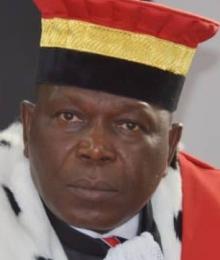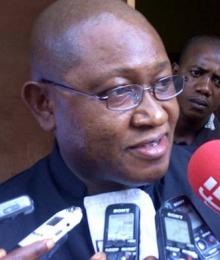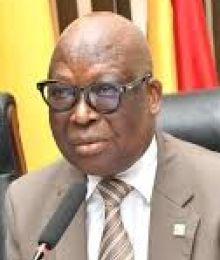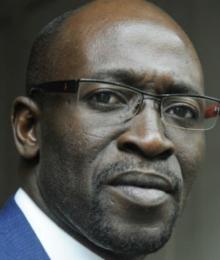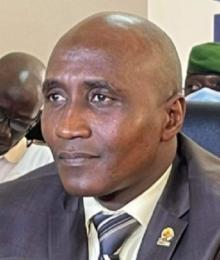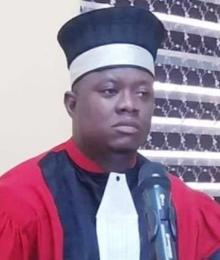



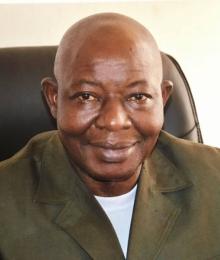
Kéléfa Sall (1958–2019) was an exceptional Guinean magistrate who left a lasting mark on his country's judicial history. Educated at the Faculty of Law of the Polytechnic Institute of Conakry and the École Nationale d'Administration in Paris, he became the first President of Guinea's Constitutional Court upon its establishment in 2015. A founding member and president of the Association of Guinean Magistrates, he dedicated his entire career to the independence of the judiciary and the betterment of conditions within the profession.
He is remembered above all for a courageous speech he delivered at the second inauguration of President Alpha Condé in December 2015, in which he publicly warned the president to "guard against succumbing to the melody of revisionist sirens" — a pointed allusion to growing ambitions to amend the constitution and secure a third term in office. That act of courage came at a steep price. In September 2018, eight of his nine fellow justices voted to remove him from his post in what many legal scholars denounced as an "institutional coup." He never recovered from that injustice, and died on July 27, 2019, in Conakry, at the age of 61 — leaving behind the enduring image of a man who chose his convictions over the comfort of power.
Kéléfa Sall (1958–2019): A Conscience in Robes
Introduction
Kéléfa Sall (1958 – July 27, 2019) stands as one of the most consequential figures in contemporary Guinean jurisprudence. As the first President of Guinea's Constitutional Court from its founding in 2015, he will be remembered by history as a man of principle who never bent under political pressure — and who paid for that courage first with his health, and ultimately with his life.
Origins and Education: The Making of a Committed Jurist
Born in 1958 in Guinea, Kéléfa Sall came of age in a country still bearing the scars of Sékou Touré's dictatorship and perpetually searching for its democratic footing. From his earliest years as a student, he stood out for his intellectual rigor and his deep commitment to the rule of law.
His academic formation was both local and international. He earned his law degree from the Faculty of Law at the Polytechnic Institute of Conakry before going on to attend the prestigious École Nationale d'Administration in Paris — a dual training that instilled in him an exacting vision of the separation of powers and judicial independence. These solid foundations would shape the entirety of his career.
A Life in Service of Guinean Justice
A career magistrate, Kéléfa Sall devoted his professional life to strengthening his country's judicial institutions. He became involved early on in the collective defense of the profession, serving as a founding member and later president of the Association of Guinean Magistrates. In that capacity, he secured the association's recognition by the International Union of Magistrates — a significant milestone for the standing of the Guinean judiciary on the world stage.
It was also through his efforts that Guinea's special statute for magistrates was signed into law, a structural reform that materially improved working conditions across the profession.
In 2007, at the height of the general strike called by the inter-union coalition USTG/CNTG, Kéléfa Sall issued an unequivocal statement of support for the labor movement — a display of social conscience rare among magistrates of his stature.
From 2010 to 2013, he served on the National Transitional Council (CNT), the legislative body that worked under military rule to lay the groundwork for a democratic Guinea. In that role, he oversaw the passage of organic laws designed to strengthen the independence of the judiciary.
President of the Constitutional Court: The Man Who Dared to Speak
When Guinea's Constitutional Court was established in 2015, Kéléfa Sall was appointed its inaugural president — a role that placed him at the very keystone of the country's democratic architecture. It was in the exercise of that office that he would perform the act for which he will long be remembered.
On December 14, 2015, at the second inauguration of President Alpha Condé, Kéléfa Sall delivered a speech of a clarity and political courage rarely witnessed in Africa. Standing before the head of state and the entire Guinean political establishment, he declared solemnly:
The governance of the nation must unite us around what is essential. Let us not surround ourselves with extremists — they are harmful to national unity. Always guard against drifting onto the forbidden paths of democracy and good governance. Guard against succumbing to the melody of revisionist sirens. For if the people of Guinea have given and renewed their trust in you, they nonetheless remain legitimately vigilant.
Those few sentences, delivered at the precise moment when rumors of constitutional revision were beginning to circulate, fell like a thunderclap. Kéléfa Sall had just publicly warned the President of the Republic that any attempt to modify the Constitution in order to cling to power would run counter to the will of the Guinean people. It was an act of exceptional courage — and he would face the consequences.
The Removal: A "Coup" Against the Constitution
From March 2018 onward, the situation within the Constitutional Court deteriorated rapidly. Eight of the nine justices filed a motion of no confidence against their president, accusing him of "authoritarianism" and "opaque management." But for the opposition, civil society, and a substantial number of constitutional scholars, the reality was quite different: the removal of Kéléfa Sall was directly tied to his public opposition to any constitutional amendment that might open the door to a third term for Alpha Condé.
On September 12, 2018, the motion was formally adopted. Kéléfa Sall refused to recognize the legitimacy of the procedure and boycotted the handover ceremony on October 8, 2018, maintaining that he remained the institution's rightful constitutional president. On October 3, 2018, a presidential decree formalized his removal and installed Mohamed Lamine Bangoura in his place.
Numerous legal experts denounced what they called an "institutional coup," and the Guinean opposition expressed outrage at an eviction widely perceived as a political act dressed up as an internal disciplinary proceeding. Civil society activists — including members of the Balai Citoyen movement — staged sit-ins outside the Constitutional Court in solidarity with the ousted president.
His Final Months: Writing as Refuge
Following his removal, Kéléfa Sall withdrew from public life. He told journalists that he was working on a memoir in which he intended to offer "the other side of the story" — his account of what he had witnessed and endured at the helm of the Constitutional Court. He would never finish it.
Suffering from serious cardiac problems, he underwent multiple hospitalizations in France and the United States, where his children reside. Deeply wounded by a dismissal he considered a flagrant injustice, he retreated into growing isolation.
On July 27, 2019, Kéléfa Sall passed away at the Sino-Guinean Friendship Hospital in Kipé, on the outskirts of Conakry. He was 61 years old.
Funeral Rites Befitting the Man: Sober and Dignified
In keeping with his wishes and those of his family, Kéléfa Sall was buried with the utmost simplicity on July 30, 2019, at the Kameroun cemetery in Conakry. No government official was present. Despite offers of a national tribute from the Association of Guinean Magistrates and former members of the CNT, the family declined every such gesture, honoring what the deceased had wished for during his lifetime.
His peers, his friends, and many legal professionals accompanied him nonetheless — in silence. The leader of the opposition, Cellou Dalein Diallo, captured the feelings of many when he said: "He did not survive the injustice."
Legacy: A Name Etched in Guinean Judicial Memory
To this day, the name of Kéléfa Sall is regularly invoked at the opening ceremonies of the Guinean judicial year. The Association of Guinean Magistrates honors him for having "actively and loyally contributed to the prestige of the judicial institution." His 2015 speech remains a touchstone in debates about judicial independence and resistance to opportunistic constitutional revision.
For an entire generation of African magistrates, he embodies what it means to stand firm in the face of power. It is an example that history, in its stubborn way, has chosen to keep.