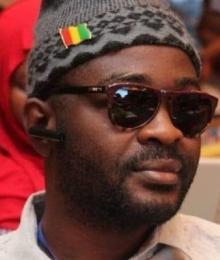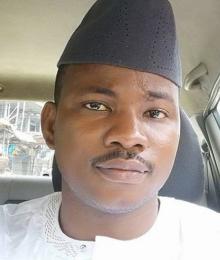



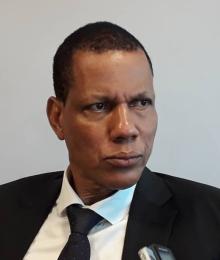
Abdoulaye Sow was an emblematic figure of Guinean trade unionism who passed away on December 2, 2025, in Conakry following a brief illness. A banking sector professional, he dedicated his career to defending workers' rights as secretary general of FESABAG (Autonomous Union Federation of Banks, Insurance and Microfinance of Guinea), a position he held for several terms, and as president of USTG (Union of Workers of Guinea), a role to which he was elected in May 2025.
Known for his outspokenness and determination, Abdoulaye Sow endured numerous ordeals, including a period of division within USTG that pitted him against Abdoulaye Camara for six years before their historic reconciliation on May 1, 2023. He also experienced detention in July 2022 following legal proceedings, which triggered the closure of all Guinean banks for more than a week in a show of solidarity.
A tireless fighter for improving workers' living conditions and respecting union freedom, Abdoulaye Sow leaves behind a legacy marked by his commitment to the unity of the Guinean trade union movement and his fierce defense of working-class interests.
Introduction
Abdoulaye Sow will remain in Guinea's history as one of the most influential voices of the contemporary trade union movement. He passed away on December 2, 2025, at the Ambroise Paré Clinic in Conakry following a brief illness. This charismatic leader dedicated his life to defending the rights of Guinean workers.
Career and Union Engagement
A banking sector professional by training, Abdoulaye Sow distinguished himself through his early commitment to the trade union movement. His union career was primarily built around two major organizations: the Autonomous Union Federation of Banks, Insurance and Microfinance of Guinea (FESABAG) and the Union of Workers of Guinea (USTG).
At the head of FESABAG, an organization he led for several terms, Abdoulaye Sow was reelected for a third five-year term during the sixth elective congress held in November 2021 at the Central Bank premises. This unopposed reelection demonstrated the trust that financial sector workers placed in him. The unionist had obtained nearly unanimous support, proudly declaring that even in a broader vote, he would have received 99.99% of votes.
Leadership at USTG and Management of Internal Conflicts
Abdoulaye Sow's commitment within USTG was marked by a period of internal tensions that divided the union for several years. Elected secretary general of USTG during a congress held in Conakry, he found himself in opposition to Abdoulaye Camara, who was also elected following a parallel congress organized in Mamou. This dual leadership created a deep fracture within the Guinean trade union movement.
In October 2021, the Conakry Court of Appeal ruled in favor of Abdoulaye Camara in this dispute. Despite this legal setback, Abdoulaye Sow continued his union struggle, demonstrating his resilience and commitment to the workers' cause. He always expressed his desire for reconciliation, stating in January 2021 that he was ready to leave the union ship if his presence was the problem, prioritizing collective interest over personal ego.
The long-awaited reconciliation finally materialized on May 1, 2023, during International Workers' Day. Hand in hand, fists raised, Abdoulaye Sow and Abdoulaye Camara buried the hatchet, marking the return of unity within USTG. This restored union was hailed as a historic moment, recalling the great union mobilizations of 2006, 2007, and 2009.
The culmination of this reconciliation came on May 22, 2025, during USTG's seventh extraordinary congress held under the theme "Social Dialogue and Union Democracy." Abdoulaye Sow was elected president of USTG, while Abdoulaye Camara became secretary general, ending six years of division.
Outspokenness That Disturbed
Abdoulaye Sow was known for his outspokenness and ability to denounce dysfunction without hesitation. In September 2021, he did not hesitate to openly criticize the CNTG (National Confederation of Workers of Guinea) led by Amadou Diallo, declaring that "CNTG's time is over." He accused this union of having been subservient to the previous government and of having deceived workers on several issues, including the 5% deduction from civil servants' salaries and fuel negotiations.
This critical stance sometimes earned him accusations of being in the pocket of those in power himself. In June 2020, Abdoulaye Sow had to defend himself against these allegations, acknowledging personal relationships with Prime Minister Ibrahima Kassory Fofana, but asserting that this did not affect USTG's independence in any way. He pointed out that it was precisely "the Mamou group" that had benefited from government favors, not his faction.
Ordeals and Detention
The year 2022 was particularly trying for the unionist. In July, Abdoulaye Sow was placed in detention at the Conakry Central Prison following a FESABAG statement denouncing a court decision concerning Ecobank and Afriland First Bank. Prosecuted for contempt of justice, defamation, and insults against the judicial institution, he spent four days in preventive detention.
This arrest triggered an unprecedented crisis in Guinea's financial sector. Banks remained closed for more than a week, with employees refusing to return to work until their union leader had regained his freedom. This massive mobilization demonstrated the influence and respect that Abdoulaye Sow enjoyed among financial sector workers.
On July 22, 2022, the Kaloum Court of First Instance imposed a five-month suspended prison sentence on the unionist, allowing his immediate release. Upon leaving prison, Abdoulaye Sow criticized the behavior of Guinean justice, denouncing the arrest and incarceration of a unionist in the 21st century. He nevertheless announced that banks would resume normal operations on July 26, 2022.
This prison experience reinforced his conviction that unionists should be protected in the exercise of their duties. During the May 1, 2024, Labor Day celebration, he vehemently advocated for respect for union freedom in Guinea, declaring: "We no longer want to hear that a unionist has been imprisoned. The unionist is not an enemy of the government, nor an enemy of the people."
Relations with Different Governments
Abdoulaye Sow's journey was marked by complex relationships with Guinean political authorities. In January 2019, he was already threatening to launch an unlimited general strike if Ibrahima Kassory Fofana's government did not respect the protocol agreement signed with SLECG. He also denounced the failure of the general labor inspection and promised to integrate its reform into future demands.
Under the military transition led by CNRD, Abdoulaye Sow maintained his demanding posture. In November 2023, he announced that negotiations with the government had failed, pointing to the government's bad faith in merely proposing a 20% increase while unions demanded 100%.
Upon Bah Oury's appointment as Prime Minister in February 2024, Abdoulaye Sow expressed his expectations, emphasizing that the new head of government's first task should be to resolve the social dispute between the government and the Guinean trade union movement.
Violence and Challenges of Trade Unionism
Abdoulaye Sow's journey was not free from violence. In November 2019, he recalled with bitterness the attacks he and some members of USTG-Conakry had suffered on May 1, 2019, at the People's Palace. According to his statements, they had been assaulted by unionists he described as "corrupt," supported by certain high-ranking state officials. This violence had even led to the hospitalization of one of his comrades.
These difficult experiences led him to constantly advocate for unity in the trade union movement. He believed that only solidarity among unionists could prevent such abuses and allow the trade union movement to fully play its role as defender of workers.
Vision and Fight for Workers
Beyond internal quarrels and confrontations with authorities, Abdoulaye Sow always kept focused on his main mission: improving the living and working conditions of Guineans. In his various positions, he advocated for strengthening workers' purchasing power, improving their working conditions in all sectors (public, private, and mixed), and reforming structures related to the world of work.
At the head of FESABAG, he had set ambitious priorities: organizing training for workers, ensuring their protection, defending financial sector companies, anticipating negotiations, creating a platform at the insurance level for collective negotiations, and establishing the collective agreement for microfinance institutions in Guinea.
His vision of trade unionism was that of a united, strong, and independent movement, capable of standing up to public authorities while maintaining constructive dialogue. He regularly recalled the great moments of the Guinean trade union movement, particularly the historic mobilizations of 1958, 2006, 2007, 2008, and 2009, periods during which unionists played a crucial role in the country's political and social history.
Legacy and Impact
The death of Abdoulaye Sow on December 2, 2025, plunged the Guinean trade union world into deep sadness. An essential figure of the trade union movement, he leaves behind a legacy marked by his combativeness, outspokenness, and unwavering commitment to the workers' cause.
His journey illustrates the challenges facing unionists in Guinea: internal divisions, political pressures, legal threats, and sometimes physical violence. Despite these obstacles, Abdoulaye Sow never abandoned his convictions, demonstrating that it was possible to conduct an authentic and independent union struggle.
The reconciliation he achieved with Abdoulaye Camara and the unification of USTG a few months before his passing probably constitute his greatest legacy to the Guinean trade union movement. This restored unity offers Guinean workers a stronger and more credible voice to defend their interests.
Abdoulaye Sow will be remembered as a man who knew how to combine firmness and dialogue, uncompromising principles and pragmatism in negotiations. His slogan "United, we can" resonates today as a testament for future generations of Guinean unionists.