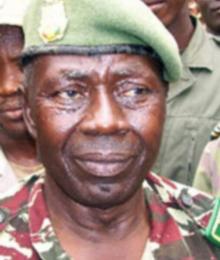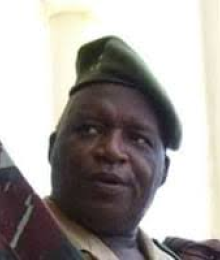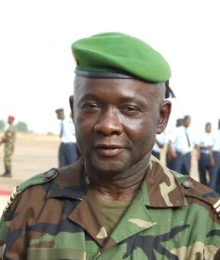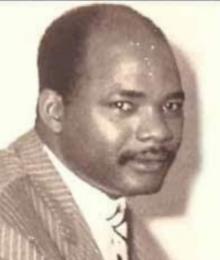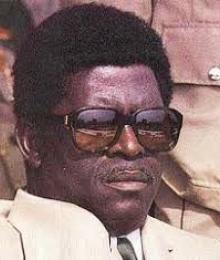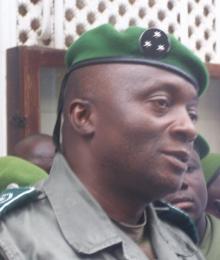



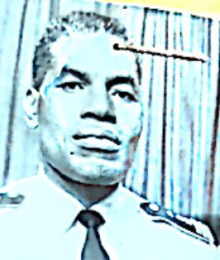
General Keïta Noumandian was the founding father of the Guinean army and its first Chief of General Staff from 1958 to 1971. Appointed Secretary of State for National Defense the day after independence on October 3, 1958, he officially created the first Guinean military units on November 1, 1958, forming 737 men including 50 non-commissioned officers.
A former officer in the French army who had rendered distinguished service, he also held the positions of Chief of the Combined Armed Forces Staff and Chief of the Military Cabinet of the Presidency. Despite his crucial role in building the national defense, he was arrested in July 1971, accused of high treason notably for having married a French woman, and was shot during the night of July 29-31, 1971, at the foot of Mount Kakoulima in Conakry, a victim of the Sékou Touré regime's repression that followed the attempted coup d'état of November 1970.
Introduction
General Keïta Noumandian remains an emblematic figure in Guinean military history, recognized as one of the founding fathers of the national army. A French officer before independence, he rendered distinguished service under the tricolor flag before dedicating his expertise to the young Republic of Guinea. Immediately following the declaration of independence on October 3, 1958, President Sékou Touré appointed him Secretary of State for National Defense, a strategic position directly attached to the Presidency of the Republic.
The Creation of the Guinean Army
On November 1, 1958, a historic date for independent Guinea, Captain Noumandian Keita accomplished a major mission by forming the first units of the Guinean army. These initial contingents numbered 737 men, including 50 non-commissioned officers and 687 enlisted men, divided into 75 chief corporals, 135 corporals, and 477 soldiers. These first units were placed under the responsibility of warrant officers Toya Condé, Aboubacar Tounkara, and Amadou Oulare, thus marking the official birth of the national armed force.
After establishing this fundamental military structure, Guinea negotiated with France for the return of several Guinean soldiers serving in the French army. These seasoned military personnel returned to Conakry in three successive contingents, on November 22, 1958, December 31, 1958, and July 18, 1959, respectively, thereby strengthening the capabilities of the young army.
A Remarkable Military Career
Promoted to the rank of General, Noumandian Keita held the position of Chief of General Staff of the Guinean Army from 1958 to 1971, spanning thirteen crucial years. He was also Chief of the Combined Armed Forces Staff and Chief of the Military Cabinet of the Presidency of the Republic, demonstrating the confidence the regime placed in him. His role in structuring and organizing the Guinean armed forces was decisive in establishing a credible national defense during the early years of independence.
A Tragic Destiny
The life of General Noumandian Keita took a dramatic turn in 1971. Retired on July 5, he was arrested the following day for "high treason and complicity with the enemy," then struck off the army rolls. The exact dates of his arrest vary according to sources, mentioning May 24, July, or July 7, 1971. His marriage to a French woman, considered suspicious in the climate of paranoia that prevailed in Guinea at the time, constituted one of the grievances held against him.
On July 29, 1971, the former General made his self-criticism on Radio Conakry, confessing to having conspired against his country as part of a "great popular trial." This confession, presented as having been made "freely," occurred in the context of terror that followed the attempted landing of November 22, 1970, by opponents of the regime with the assistance of elements of the Portuguese army.
The End of a National Hero
General Noumandian Keita was executed during the night of July 29-31, 1971, shot at the foot of Mount Kakoulima in Conakry. Some sources specify the date as July 30, 1971. He was detained at the infamous Camp Boiro before his execution. His death illustrates the brutality of the repression exercised by Sékou Touré's regime, which did not hesitate to eliminate the very person who had founded the country's military institution.
The General was sentenced to ten years in prison before being ultimately executed, a victim of the great fear that had gripped the Guinean president after the attempted coup d'état. His principal crime, according to the regime's accusations, was having married a white foreigner, a fact revealing the xenophobia and paranoia that characterized this dark period of Guinean history.
Today, General Noumandian Keita is recognized as a national hero, the founder of the Guinean army whose legacy endures despite the tragedy of his end. His name appears at the top of the list of nineteen Chiefs of Staff who have succeeded one another at the head of the Guinean armed forces since independence.